
Form-first design
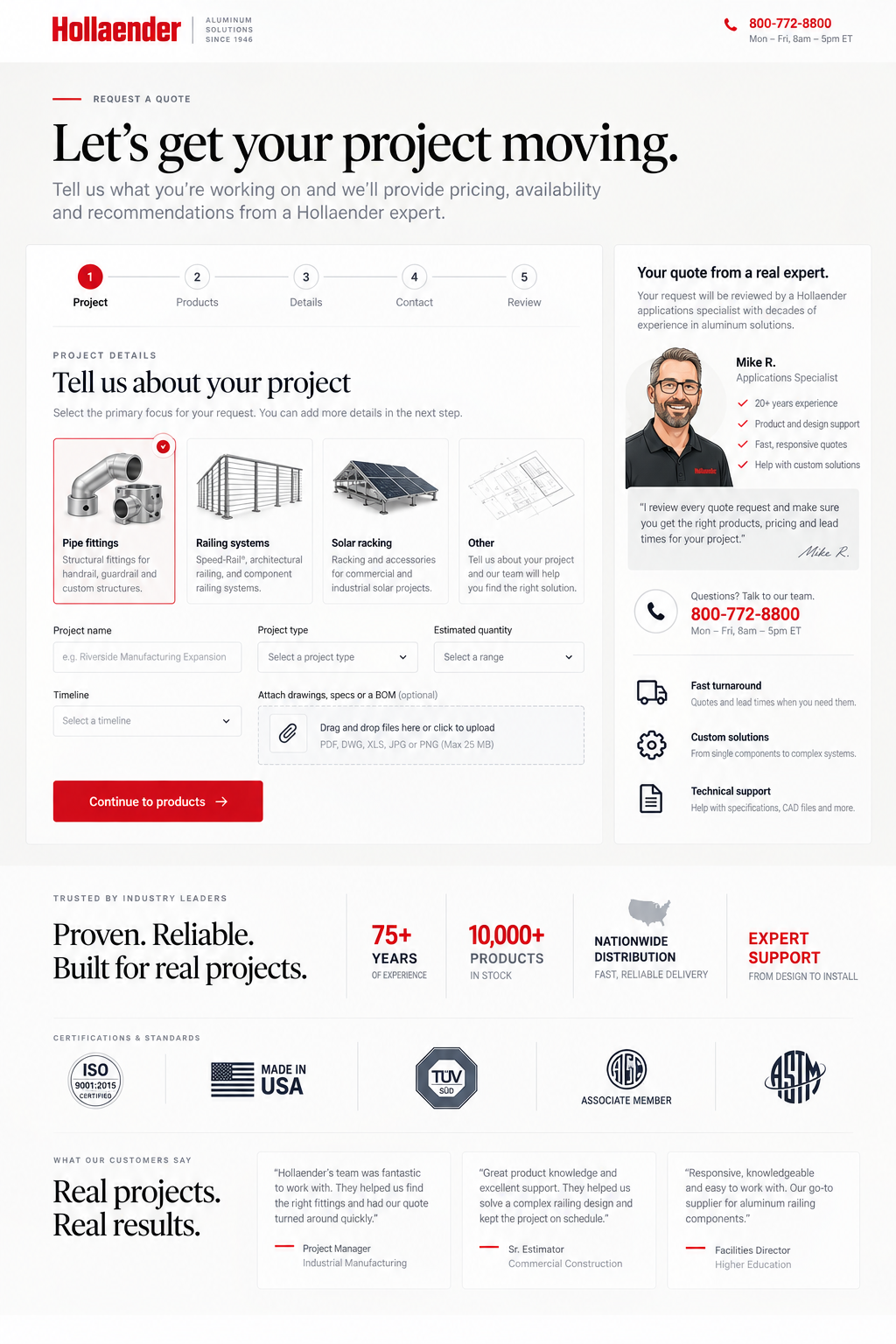
The quote form sits at the center of the page, with the first question visible without scrolling.
Playbook / Manufacturers & distributors
The best Request a Quote page is a focused quoting application, not a brochure with a form attached. Make asking for a quote easy, put proof next to every decision, and show buyers a real expert is ready to help.
Walk through the pageEverything else on the page supports the quote request.
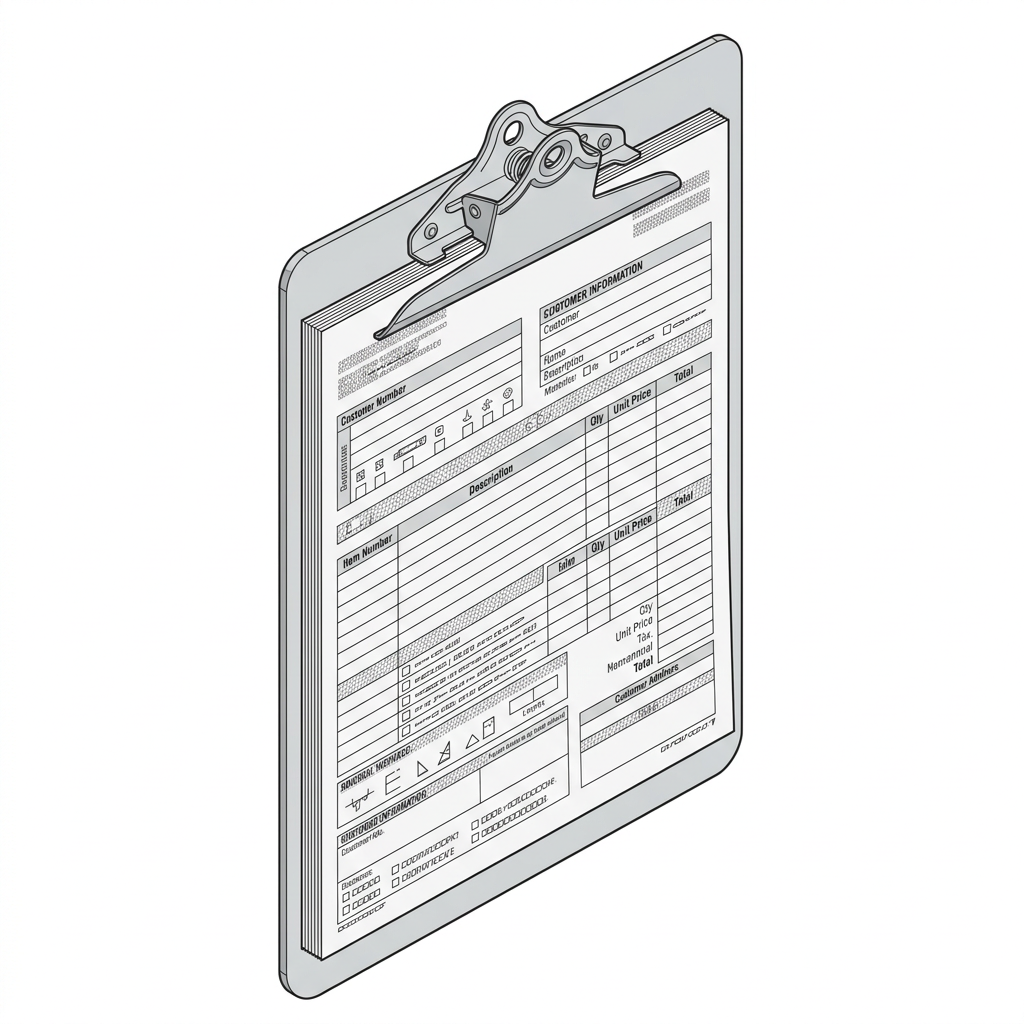
Collect the rest of the details step by step.
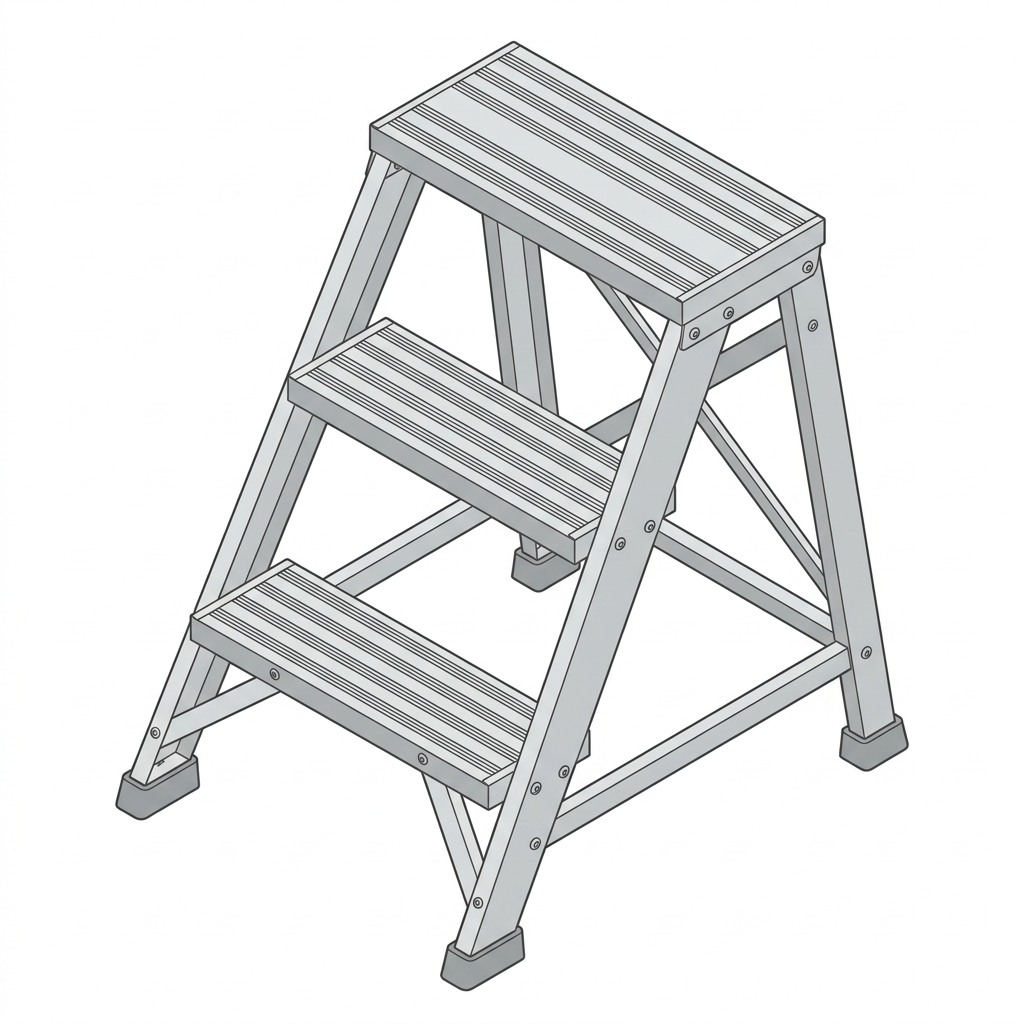
Cards and images beat dropdowns for industrial categories.
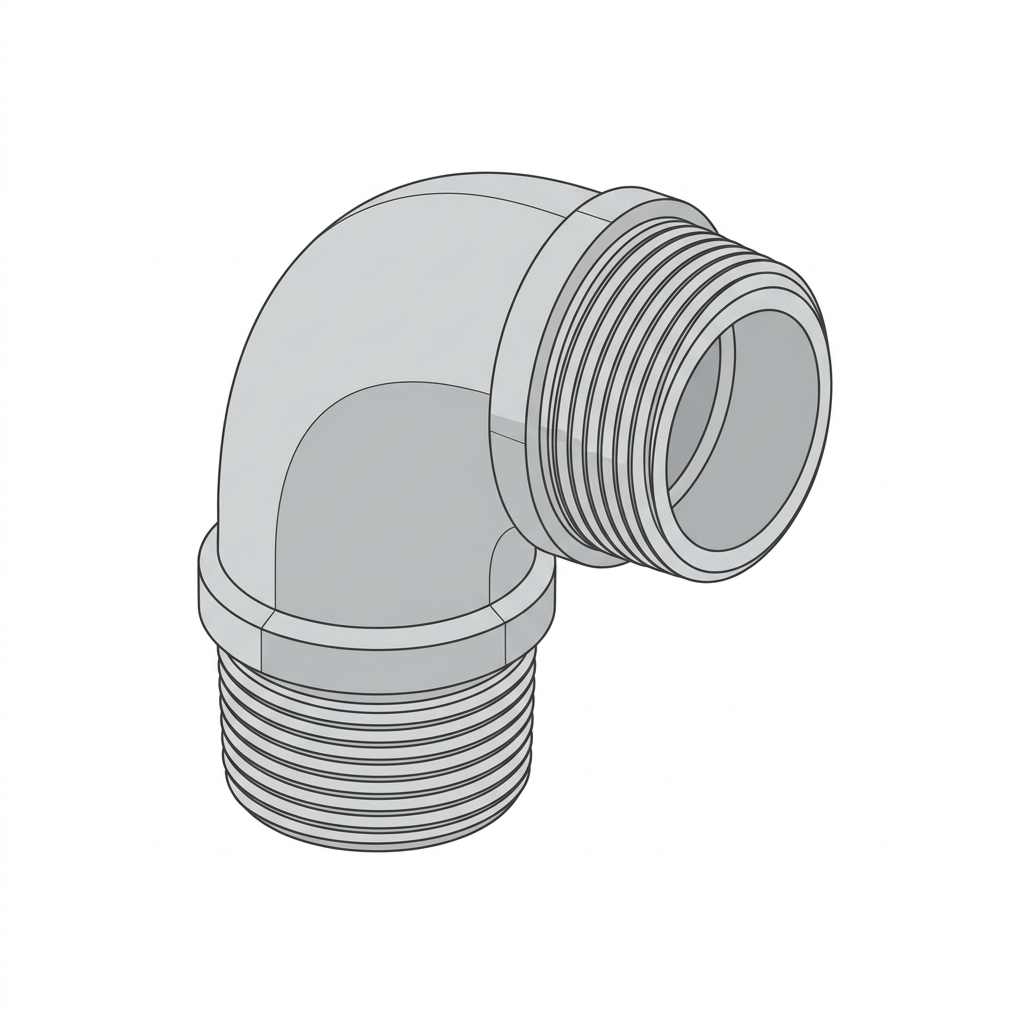
Show the expert who will actually prepare the quote.
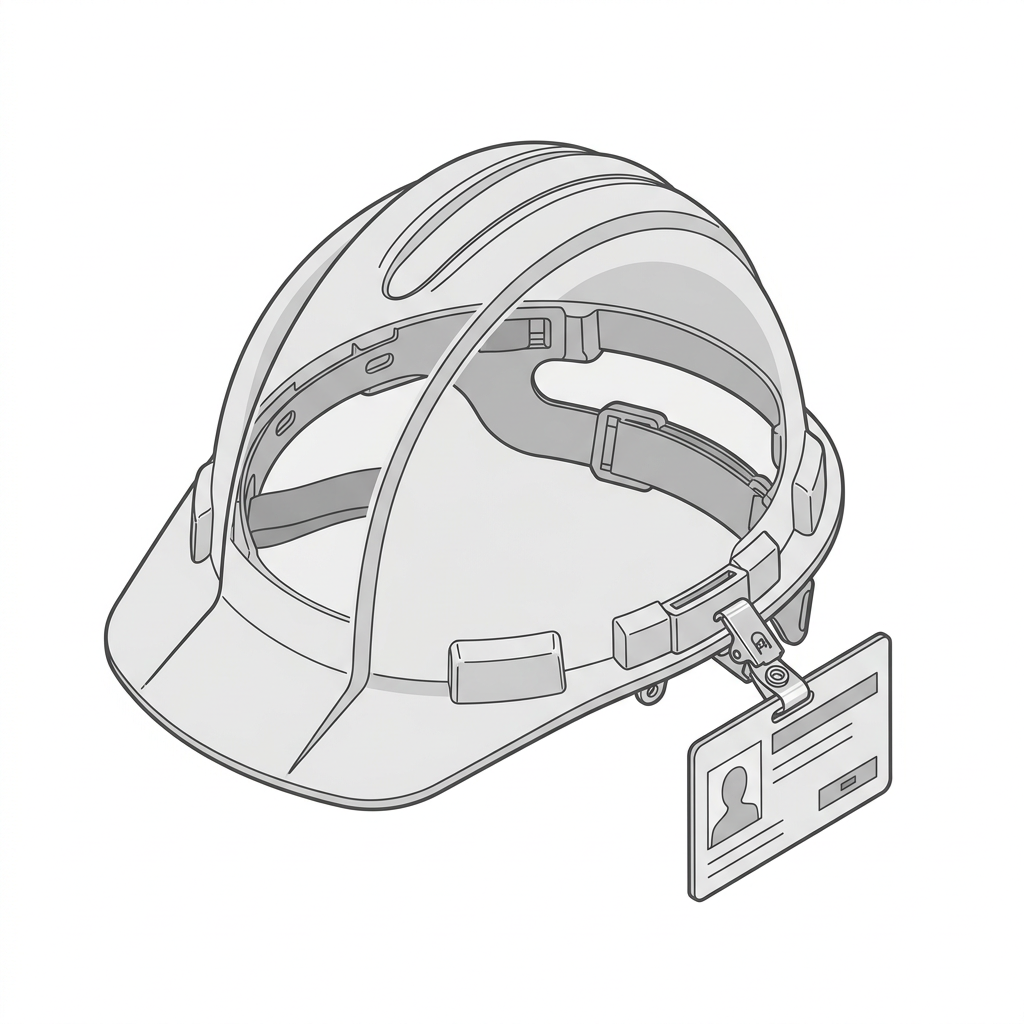
Show the right reassurance at each step, not in a footer.
Explain what happens next and how long it really takes.
Connect every request to pipeline and orders.
Why quote pages lose buyers
Someone on a Request a Quote page already has a job to price. Most of these pages still treat them like a first-time visitor.
A big photo, a company history, and a generic form at the bottom. Buyers who came to price a job have to hunt for the one thing they need.
Twenty fields on one screen look like an hour of work. Procurement teams close the tab and email a competitor instead.
No person, no proof, no idea when they’ll hear back. A buyer about to share drawings and volumes has no reason to trust the form.
The page, top to bottom
One continuous page. The form stays at the center and every other piece is there to get the buyer to the next step.
Before and after
| Typical quote page | Quote engine |
|---|---|
| Hero photo and company story first | The first question visible without scrolling |
| One long form with every field | Three short steps that build on each other |
| A “product type” dropdown | Picture cards with fields that adapt |
| “Someone will be in touch” | A named specialist and a real response time |
| Logos and testimonials in the footer | The right proof beside each decision |
| Counting form fills | Tracking requests through to orders |
Every page we build from this play has all ten. The form stays at the center; everything else supports it.
The quote form sits at the center of the page, with the first question visible without scrolling.
Speak to what the buyer wants: pricing, availability, lead times, or a problem solved.
Questions arrive in logical stages, so the form never looks like a wall of fields.
Recognizable product cards instead of a long dropdown, with fields that adapt to the pick.
An actual person’s photo, role, and expertise, shown next to the decision.
Inventory, locations, capacity, and experience, as short numbers buyers can scan in seconds.
Only the credentials that are real and relevant, in a quiet strip procurement can check.
Three real stories about speed, expertise, and reliability beat twenty generic quotes.
Say who reviews the request and when buyers will hear back, only if you can keep that promise.
A phone number or email beside the form for buyers who would rather talk.
We map where buyers drop off today and gather your real proof: inventory, certifications, specialists, and approved testimonials.
Progressive steps, product cards, adaptive fields, and file uploads, with your categories and proof managed in your CMS.
Requests route by product and territory into your CRM with files attached, and every step is tracked so we can see where buyers stop.
What we measure
We report on the numbers that show whether the page is making you money.
Your website. A clear plan forward.
Enter your website URL and we’ll tell you exactly what we’d change to increase your credibility, traffic, and leads—and what it would cost to make it happen.